

If you've ever tried retinol only to experience redness, peeling, dryness, or irritation, you're not alone. While traditional retinoids remain one of the most studied anti-aging ingredients, individual tolerance varies, and some people find them difficult to use consistently.
That's where bakuchiol comes in.
Derived from the Psoralea corylifolia (babchi) plant, bakuchiol is a botanical ingredient studied for visible signs of skin aging. It may offer a gentler option for some people, but no ingredient is guaranteed to be irritation-free.
For early laboratory and clinical findings, read the 2014 study of bakuchiol's retinol-like activity and cosmetic effects.
Why Sensitive Skin Often Struggles with Retinoids
Retinol and other retinoids work by accelerating skin cell turnover and supporting collagen production. While effective, they commonly cause:
-
Dryness
-
Peeling
-
Redness
-
Stinging
-
Increased sensitivity during the adjustment period
For people with naturally sensitive skin—or mature skin with a weakened skin barrier—these side effects can make consistent use difficult.
Why Bakuchiol Is Different
Bakuchiol is not a retinoid, but research has shown that it can activate many of the same skin pathways involved in improving the appearance of aging skin.
Clinical studies have found that bakuchiol can help:
-
Reduce the appearance of fine lines and wrinkles
-
Improve skin firmness and elasticity
-
Support a more even-looking skin tone
-
Provide antioxidant protection against environmental stressors
-
Offer an alternative for people who find retinol difficult to tolerate
In a small, randomized 12-week study involving 44 participants, a 0.5% bakuchiol cream and a 0.5% retinol cream both improved wrinkles and hyperpigmentation, with no statistically significant difference between groups. Retinol users reported more scaling and stinging. Bakuchiol was applied twice daily and retinol once daily. These findings do not establish equivalent results for every bakuchiol formula or for Botika's finished products.
Earlier laboratory research published in 2014 found similarities in how bakuchiol and retinol influenced gene expression in skin models. The paper also reported a clinical case study of a bakuchiol formula. Laboratory findings help explain potential mechanisms, but they are not proof that all finished products produce the same results.
An Option for Mature Skin
As skin matures, concerns can include changes in firmness, texture, and moisture. Bakuchiol is used in cosmetic formulas targeting the appearance of:
-
Fine lines
-
Uneven texture
-
Dullness
-
Loss of firmness
Choose a formula you can use comfortably and consistently. Results and tolerance depend on the complete product, not just one ingredient.
An Option for Sensitive Skin
Bakuchiol may be an option if you prefer a gentler approach or have found retinol difficult to tolerate. That does not mean every bakuchiol formula will suit sensitive skin.
Review the full ingredient list for known sensitivities, patch test new products, and introduce them gradually according to their label directions. Stop using a product if irritation occurs. If your skin is persistently reactive, ask a dermatologist for guidance.
How to Use a Bakuchiol Face Oil
Apply 2–4 drops to clean skin after cleansing and toning. Gently massage into the face and neck.
For most people, bakuchiol can be used morning or evening. If applying during the day, always follow with a broad-spectrum sunscreen.
A Botanical Approach to Healthy Aging
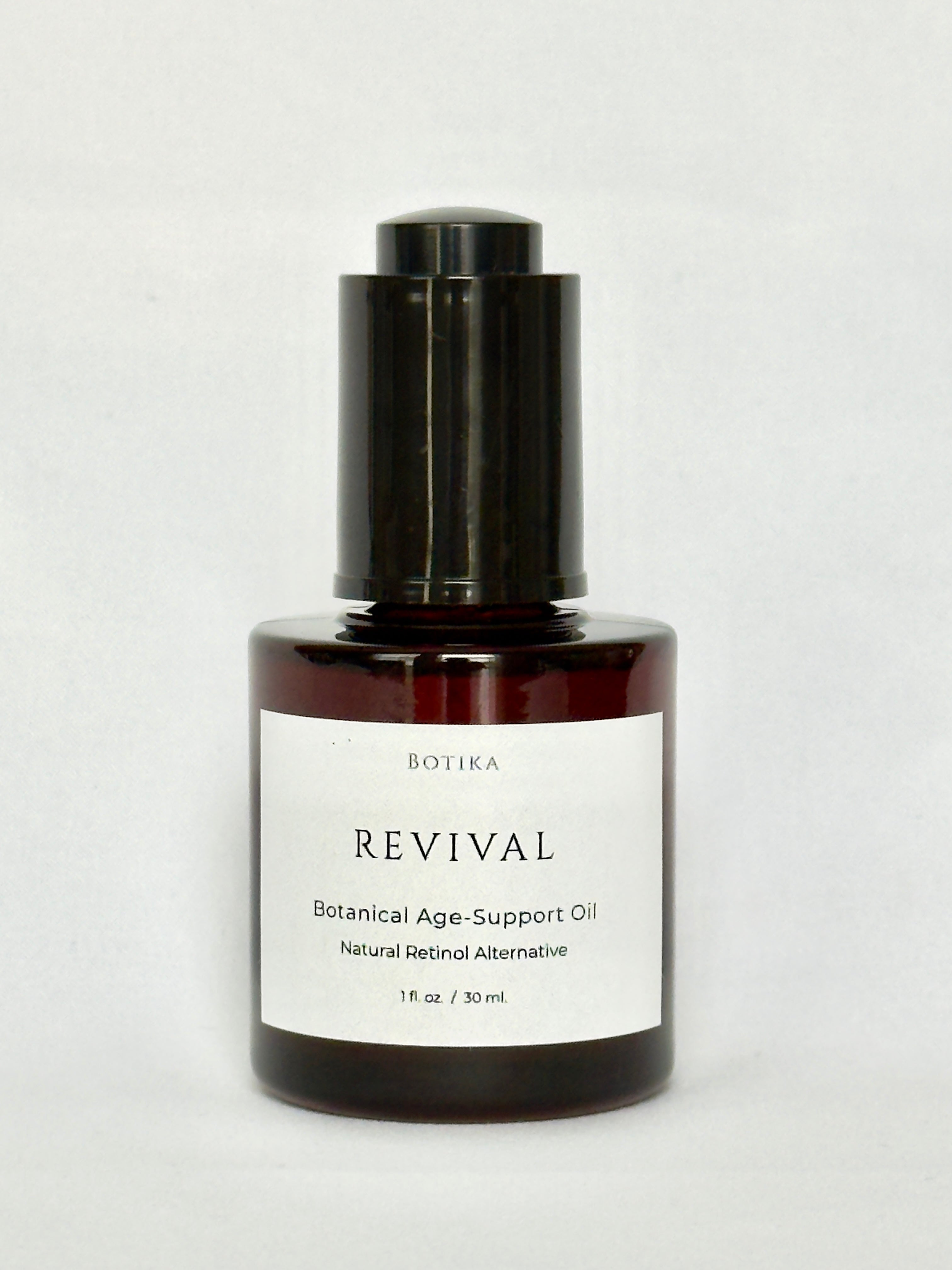
At Botika, we believe effective skincare doesn't have to be harsh. Our Bakuchiol Face Oil combines this plant-powered active with nourishing botanical oils to support smoother, softer, healthier-looking skin while respecting the skin's natural barrier.
If you're looking for a gentler approach to the appearance of skin aging, bakuchiol may be worth considering. Choose based on the complete formula and your own skin's response rather than assuming it will suit everyone.
About Monica Miramontes
Monica Miramontes is the founder and formulator behind Botika Skincare in Nashville, Tennessee. Her own search for gentle, effective, accessible skincare inspired her to create botanical formulas in small batches. She draws on hands-on formulation experience and conversations with customers at local farmers’ markets to shape her approach to skincare.


