

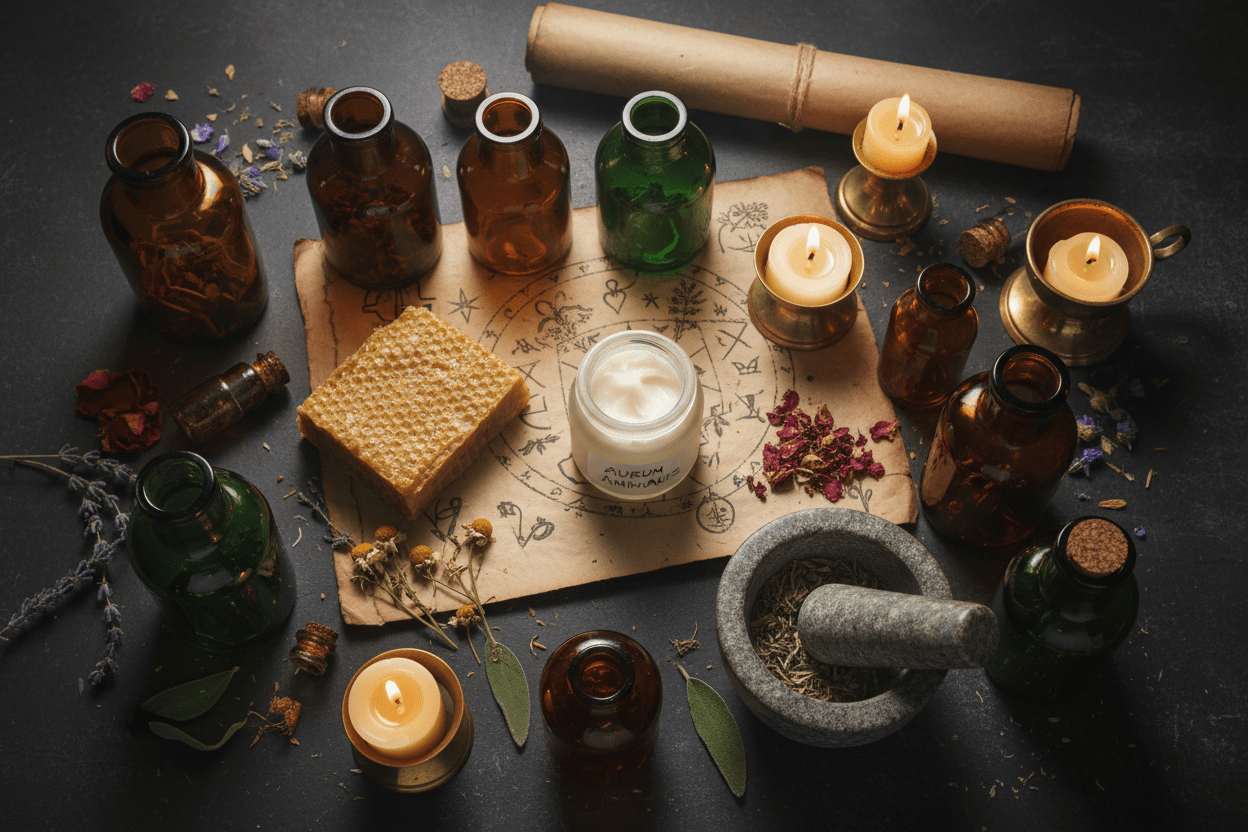
Before serums, synthetic emulsifiers, and lab-engineered moisturizers, there was tallow. This humble, nutrient-rich fat has been a cornerstone of human skincare for thousands of years — and today, it's making a powerful comeback. At Botika Skincare, we're proud to be part of that revival. Here's the full story.
Ancient Civilizations: The Original Skincare Ritual
The use of animal fats in skincare dates back to at least 3000 BCE. Ancient Egyptians applied rendered animal fat mixed with aromatic resins to protect their skin from the harsh desert climate. They understood intuitively what science would later confirm: fat-based preparations create a protective barrier that locks in moisture and shields skin from the elements.
In ancient Rome, gladiators were rubbed down with tallow-based preparations before and after combat — not just for muscle recovery, but to protect and condition their skin. Roman physicians like Galen documented fat-based skin remedies extensively in their medical writings.
Meanwhile, in traditional Chinese and Ayurvedic medicine, animal fats were used to treat wounds, burns, and dry skin conditions. These weren't primitive guesses — they were the result of centuries of careful observation and refinement.
Medieval Europe: Tallow as Everyday Skincare
Through the Middle Ages, tallow was a staple of European households. It was rendered from beef or mutton fat and used for everything from candle-making to soap production to skin protection. Medieval apothecaries combined tallow with herbs, beeswax, and plant oils to create salves and balms for chapped skin, wounds, and inflammation.
Tallow soap was the standard cleansing agent across Europe for centuries — prized for its ability to clean without stripping the skin's natural oils. According to research published in Industrial Crops and Products, traditional animal-fat soaps have a fatty acid profile that is uniquely compatible with human skin.
The Industrial Revolution: When Tallow Was Replaced
The 19th and 20th centuries brought dramatic changes to the skincare industry. The rise of industrial chemistry introduced petroleum-derived ingredients, synthetic emulsifiers, and mass-produced moisturizers. Tallow — once the gold standard — was gradually replaced by cheaper, more scalable alternatives like mineral oil, petrolatum, and synthetic glycerin.
By the mid-20th century, tallow had largely disappeared from mainstream skincare formulations. It was seen as old-fashioned, and the beauty industry embraced the idea that synthetic was better — more consistent, more shelf-stable, more modern.
But something was lost in that transition.
The Problem with Synthetic Alternatives
As synthetic skincare proliferated, so did reports of skin sensitivity, barrier dysfunction, and chronic dryness. Many dermatologists began noting that modern moisturizers, while effective at creating a surface film, didn't truly nourish the skin at a cellular level.
The reason? Synthetic ingredients don't speak the same biological language as your skin. Human skin is made up of lipids — fats — and it responds best to ingredients that mirror its own composition. According to the National Institutes of Health, the skin barrier relies on a precise balance of fatty acids, cholesterol, and ceramides — all of which are naturally present in grass-fed tallow.
The Modern Revival: Back to Basics
In recent years, a growing movement of consumers and formulators has rediscovered tallow — and the results have been remarkable. Driven by interest in ancestral health practices, clean beauty, and ingredient transparency, tallow-based skincare has surged in popularity.
What's driving the revival?
- Biocompatibility: Tallow's fatty acid profile — rich in oleic, palmitic, and stearic acids — closely mirrors human sebum, making it exceptionally well-absorbed.
- Nutrient density: Grass-fed tallow is naturally rich in fat-soluble vitamins A, D, E, and K — essential for skin repair, regeneration, and protection.
- Minimal ingredients: Tallow-based products require fewer synthetic additives, making them ideal for sensitive skin and those seeking cleaner formulations.
- Sustainability: When sourced from grass-fed, ethically raised animals, tallow is a byproduct that would otherwise go to waste — making it a more sustainable choice than many petroleum-derived alternatives.
Tallow at Botika Skincare
At Botika, we've embraced tallow not as a trend, but as a return to what works. Our small-batch formulations combine grass-fed tallow with carefully selected botanical actives to create products that are as effective as they are clean.
Explore our tallow-based collection:
- Tallow Rosehip Balance Moisturizer — nourishing daily hydration with the brightening power of rosehip
- Whipped Tallow Frankincense — luxuriously whipped with grounding, anti-aging frankincense
- Tallow Blue Face Balm — deeply nourishing balm with blue tansy and frankincense
Want to go deeper? Read our article on why we use tallow in our soaps, moisturizers & balms.
The history of tallow is the history of skincare itself. And at Botika, we're honored to carry that tradition forward — one small batch at a time. 🌿


