

Quick answer: Enzyme exfoliants are usually the gentlest option. Fruit enzymes like papain (from papaya) loosen dead surface cells without the friction of scrubs or the stronger action of acids. Scrubs physically buff skin and can irritate it if they are harsh or overused. Acids like glycolic and salicylic acid work more deeply and are effective, but they are more likely to cause sensitivity. Sensitive and dry skin types usually do best with enzymes, while oily, congested skin often benefits from salicylic acid.
Exfoliating can make skin look brighter and smoother and help other products work better. Done too often or too harshly, it can do the opposite: redness, stinging, flaking, and even more breakouts. Choosing the right type for your skin matters more than choosing the strongest one.
What Exfoliation Does
Your skin naturally sheds dead cells, but the process slows with age, dryness, and sun exposure. Buildup can make skin look dull and rough and contribute to clogged pores. The American Academy of Dermatology describes two main types of at-home exfoliation, mechanical (scrubs, brushes) and chemical (acids). Enzymes are a gentle form of chemical exfoliation.
The Three Types Compared
| Enzyme | Scrub (physical) | Acid (AHA / BHA) | |
|---|---|---|---|
| How it works | Proteins loosen bonds between dead surface cells | Particles buff cells away by friction | Dissolves bonds between cells; BHA also works inside pores |
| Strength | Mild | Mild to harsh, depending on particles and pressure | Moderate to strong |
| Irritation risk | Low | Moderate (micro-tears if harsh) | Moderate; can increase sun sensitivity |
| Best for | Sensitive, dry, dull skin | Body, rough areas; resilient skin | Oily, congested, sun-damaged skin |
Enzyme Exfoliants: The Gentle Option
Enzymes such as papain (papaya), bromelain (pineapple), and pumpkin enzymes break down the proteins that hold dead cells to the surface. A 2026 review of cosmetic enzymes notes that how an enzyme is formulated and delivered matters as much as the enzyme itself.
Enzymes are gentle, but they are still active. Lab research shows that concentrated papain can weaken skin's barrier proteins, which is why a well-balanced formula and sensible use matter.
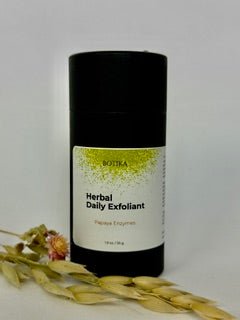
Our Daily Enzyme Exfoliant Powder combines papain with soothing colloidal oats and marshmallow root, rice starch to absorb excess oil, and hibiscus and licorice extracts to help even tone. Because it is a dry powder that activates with water, you control the strength: use less powder and more water for a softer exfoliation.
Scrubs: Fine for Some, Risky for Others
Scrubs give instant smoothness, which is why people love them. The problem is jagged particles (like crushed shells) and too much pressure, which can irritate skin. If you use a scrub on your face, choose fine, round particles and very light pressure. Rougher areas like elbows, knees, and heels are a better fit, followed by a rich balm like our Shea Butter & Calendula Body Balm.
Acids: Effective but Stronger
- AHAs (glycolic, lactic): work on the surface for brightness and texture.
- BHA (salicylic acid): oil-soluble, works inside pores; best for oily and blemish-prone skin.
If you already use a salicylic acid serum, such as our Clarifying Serum, you may not need another exfoliant on the same day. Learn more in Salicylic Acid + Niacinamide for Acne-Prone Skin.
How Often Should You Exfoliate?
The AAD notes that the more aggressive the exfoliation, the less often you should do it. As a starting point:
- Sensitive or dry skin: gentle enzyme, 2 to 3 times a week
- Normal or combination skin: enzyme, 3 to 4 times a week, or daily if your skin is comfortable
- Oily or congested skin: enzyme daily or a salicylic serum, not both on the same night at first
Always moisturize after exfoliating, wear sunscreen the next day, and never exfoliate over cuts, sunburn, or active irritation. Take extra care if you use retinol or benzoyl peroxide.
Signs You Are Over-Exfoliating
- Stinging when you apply products that never stung before
- Redness, tightness, or a shiny "plastic" look
- Flaking or new breakouts
If this happens, stop all exfoliants for one to two weeks and focus on barrier repair. A rich, calming cream like our Honey & Colloidal Oat Cream helps. See How to Repair Your Skin Barrier Naturally and browse our Sensitive Skin collection.
Frequently Asked Questions
Is enzyme exfoliation good for sensitive skin?
It is usually the best place to start. Patch test first, and begin 2 to 3 times a week.
Can I use an enzyme exfoliant every day?
Many people with normal, combination, or oily skin can use a gentle enzyme powder daily. Reduce frequency if you notice tightness or redness.
Can I use an enzyme exfoliant with vitamin C or retinol?
Yes, but not necessarily at the same time. Use the enzyme in the morning and retinol or bakuchiol at night, or alternate nights.
Does exfoliating help dark spots?
It helps remove dull surface cells so skin looks brighter and brightening ingredients absorb more evenly. See How to Fade Dark Spots Naturally.
This article is for educational purposes and is not medical advice. Written by Monica Miramontes, founder of Botika Skincare. Last updated: October 2026.


