

Quick answer: Retinol has the strongest research for fine lines and firmness, but it often causes dryness, peeling, and sensitivity. Topical peptides are much gentler and can modestly improve the look of skin, mainly through hydration and smoother texture. For skin after 40 that does not tolerate retinol well, a practical approach is a peptide moisturizer plus a retinol alternative like bakuchiol, with daily sunscreen.
After 40, many people notice skin that feels drier, looks less firm, and becomes more easily irritated, all at the same time. That makes choosing anti-aging products tricky: the strongest ingredients are often the hardest to tolerate. Here is how peptides and retinol compare, and how to build a routine that supports your skin instead of fighting it.
What Changes in Skin After 40
- Less collagen and elastin: skin looks less firm and lines become more visible.
- Slower cell turnover: skin can look duller and rougher.
- Less natural oil: skin feels drier, especially after menopause.
- A more fragile barrier: products that used to feel fine may start to sting.
That last point is why gentleness matters so much. Read How to Repair Your Skin Barrier Naturally if your skin has become more reactive.
What Retinol Does
Retinol is a form of vitamin A that speeds cell turnover and supports collagen. It is one of the best-studied anti-aging ingredients. The trade-off is the "retinization" period: dryness, flaking, redness, and sensitivity to the sun, which lead many people to quit. It is also not recommended during pregnancy.
What Peptides Do
Peptides are short chains of amino acids, the building blocks of proteins like collagen. In skincare, some peptides act as "messengers" that are thought to encourage skin to support its structure, while others mainly hydrate and condition.
The research is encouraging but modest. A systematic review and meta-analysis of 19 randomized trials (1,341 participants) found that peptides improved skin hydration and brightness, with a modest effect on wrinkles. Most of the wrinkle benefit came from oral peptides, and effects on elasticity were inconsistent. Earlier studies of specific topical peptides, such as palmitoyl pentapeptide, showed improvements in the look of fine lines. Peptides were well tolerated across trials.
Peptides vs. Retinol vs. Bakuchiol
| Retinol | Peptides | Bakuchiol | |
|---|---|---|---|
| Strength of research | Strongest | Modest, varies by peptide | Promising, growing |
| Main benefits | Lines, texture, tone | Hydration, smoothness, look of firmness | Lines, tone, texture |
| Irritation | Common at first | Rare | Low |
| Sun sensitivity | Yes | No | Not known to increase it |
| Best for | Resilient skin | Sensitive, dry, mature skin | Sensitive skin wanting retinol-like results |
Bakuchiol is worth a special mention. In a randomized, double-blind study in the British Journal of Dermatology, bakuchiol and retinol both improved wrinkles and pigmentation over 12 weeks, with less scaling and stinging in the bakuchiol group. We explain why we chose it in Bakuchiol or Retinol.
Can You Use Peptides and Retinol Together?
Yes. Peptides do not exfoliate, so they pair well with retinol or bakuchiol. Many people find a peptide moisturizer helps their skin stay comfortable while using a stronger active.
A Gentle Firming Routine After 40
Morning
- Cleanse with the Rose & Oat Gentle Face Wash.
- Apply the Anti-Aging Eye Cream with Plankton Extract around the eyes.
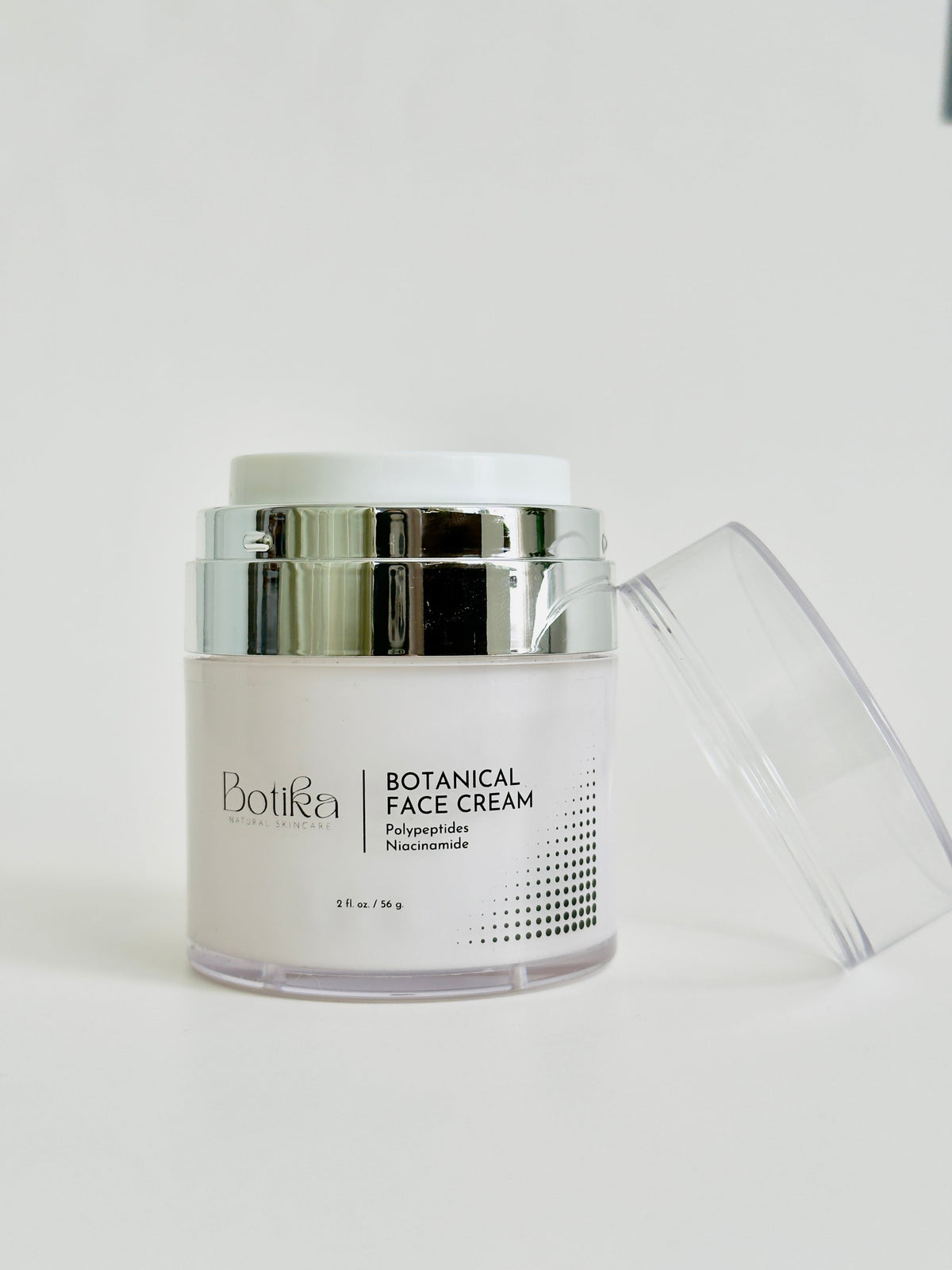
- Moisturize with the Botanical Peptide Firming Cream, made with plant peptides from pea protein plus niacinamide, jojoba, and olive squalane.
- Finish with broad-spectrum sunscreen, SPF 30 or higher. Sun protection is the most proven anti-aging step of all.
Evening
- Remove sunscreen with the Apricot & Squalane Oil Cleanser.
- Apply a retinol alternative: the lightweight Bakuchiol & Niacinamide Serum or, for drier skin, the Anti-Aging Face Oil.
- Seal with the Peptide Firming Cream.
Prefer a ready-made routine? The Anti-Aging Skincare Set for Age Support brings three steps together, or browse the Aging Skin collection.
What Results to Expect
Hydration benefits can be felt within days. Changes in the look of fine lines and firmness take longer, usually 8 to 12 weeks of consistent use. No cream can lift skin like a professional procedure; the honest goal is skin that looks smoother, more hydrated, and more resilient over time.
Frequently Asked Questions
Are peptides better than retinol?
Not stronger, but gentler. Retinol has more evidence for wrinkles. Peptides are a better fit if your skin cannot tolerate retinol or you want to support it while using one.
Are plant peptides as effective as synthetic peptides?
Research on specific plant-derived peptides is more limited than research on well-known synthetic peptides. They are gentle and hydrating, and we describe their benefits as supporting the look of firmness, not as a replacement for retinoids.
At what age should I start using peptides?
There is no set age. Many people start in their 30s or 40s, when dryness and loss of firmness become noticeable.
Can I use peptides with vitamin C?
Yes. They are commonly used in the same routine. See our vitamin C guide.
This article is for educational purposes and is not medical advice. Written by Monica Miramontes, founder of Botika Skincare. Last updated: October 2026.


