

Quick answer: Rosemary shows real promise for hair thinning, but the evidence is still limited. The best-known study, a 2015 randomized trial of 100 people with pattern hair loss, found that rosemary oil increased hair count after 6 months about as much as 2% minoxidil, with less scalp itching. It was one small study, so rosemary works best as part of a consistent scalp-care routine, not as a guaranteed cure.
Rosemary oil has gone viral on social media as a "natural minoxidil." Some of that excitement comes from real research, and some of it goes much further than the science does. Since we use rosemary in our hair care, we want you to know what the evidence supports and what it does not.
What the Rosemary vs. Minoxidil Study Found
The study most people quote is a 2015 randomized comparative trial published in Skinmed. Here is what happened:
- Who: 100 adults with androgenetic alopecia (pattern hair loss)
- What: 50 used rosemary oil and 50 used minoxidil 2% on the scalp
- How long: 6 months, with checks at 3 and 6 months
- At 3 months: neither group showed a significant change in hair count
- At 6 months: both groups had a significant increase in hair count, with no significant difference between them
- Side effects: scalp itching increased in both groups but was more frequent with minoxidil
What the Study Did Not Prove
An honest reading of the research includes its limits. A review of natural treatments for androgenetic alopecia lists this study among the promising options, while noting that the overall evidence is still early.
- It was a single study with 100 participants, and it has not been widely repeated.
- It was single-blind, not double-blind.
- It compared rosemary to 2% minoxidil, a lower strength than the 5% often used today. A recent comparative review found 5% minoxidil twice daily was the most effective over-the-counter option for male pattern hair loss.
- Participants used a leave-on rosemary oil. A rinse-off shampoo stays on the scalp for less time, so results can differ.
Our takeaway: rosemary is a reasonable, gentle option to support scalp health and the look of fuller hair, especially if you prefer to start with botanicals. It is not proven to replace medical treatment.
Why Hair Thins: Causes Worth Ruling Out
Hair thinning has many causes, and some need medical attention. The American Academy of Dermatology lists causes such as hereditary hair loss, stress, childbirth, thyroid problems, low iron, certain medications, and tight hairstyles. If your hair loss is sudden, patchy, or comes with other symptoms, see a dermatologist or doctor first.
How to Use Rosemary in a Hair-Care Routine
1. Wash with a gentle, strengthening shampoo
Harsh sulfates can leave the scalp dry and hair brittle, which makes breakage worse. Our Rosemary & Ashwagandha Strengthening Shampoo is sulfate-free and combines rosemary essential oil with ashwagandha, amla, horsetail, and hydrolyzed rice protein to strengthen strands and reduce breakage. Massage it into the scalp for 1 to 2 minutes before rinsing so the botanicals have time to work.
2. Add a leave-on scalp oil
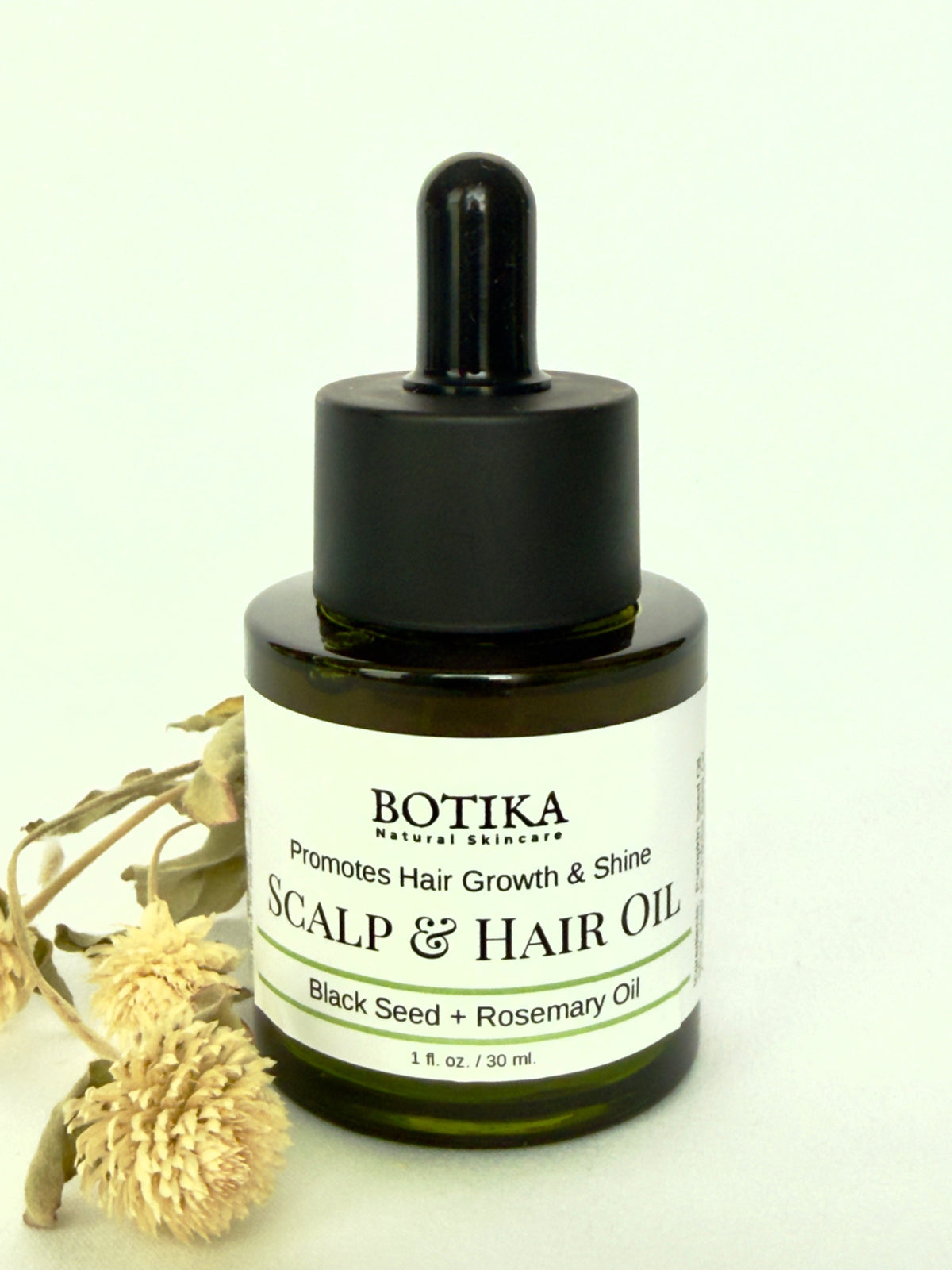
Because the study used a leave-on oil, a scalp oil is the closest match to the research. Our Scalp & Hair Strengthening Oil with Black Seed & Ashwagandha blends rosemary with black seed, amla, pumpkin seed, jojoba, castor, and peppermint oils. Massage a few drops into the scalp 3 to 4 times a week, ideally a few hours before washing or overnight.
3. Be patient and track progress
In the study, no meaningful change appeared at 3 months. Plan on at least 6 months of consistent use, and take photos of your part line or crown in the same light every month.
4. Protect what you have
- Avoid very tight ponytails and braids.
- Use low heat when styling.
- If your hair is color-treated or dry, alternate with our Sulfate-Free Shampoo with Keratin — Color Safe.
Shop the full Hair Care collection.
Is Rosemary Safe for Everyone?
Rosemary is generally well tolerated in hair care, but essential oils can irritate some people. Do a patch test behind the ear 24 hours before first use. Never apply undiluted rosemary essential oil directly to the scalp. If you are pregnant, breastfeeding, or have a scalp condition such as psoriasis or eczema, check with your doctor first.
Frequently Asked Questions
Does rosemary oil really regrow hair?
One randomized trial found rosemary oil increased hair count after 6 months in people with pattern hair loss, similar to 2% minoxidil. That is encouraging but not definitive, and results vary from person to person.
How long does rosemary take to work for hair?
In the main study, results appeared at 6 months, not at 3 months. Plan for at least 6 months of consistent use.
Is rosemary shampoo as effective as rosemary oil?
Probably less on its own, because shampoo is rinsed off. Pairing a rosemary shampoo with a leave-on scalp oil is closer to how rosemary was studied.
Can I use rosemary with minoxidil?
Some people do, but combining scalp products can increase irritation. Ask your dermatologist before combining them.
Does rosemary help with breakage?
Breakage is usually about the hair shaft, not the follicle. Gentle washing, protein (like rice protein), and conditioning oils do more for breakage than rosemary alone.
This article is for educational purposes and is not medical advice. Written by Monica Miramontes, founder of Botika Skincare. Last updated: October 2026.


