

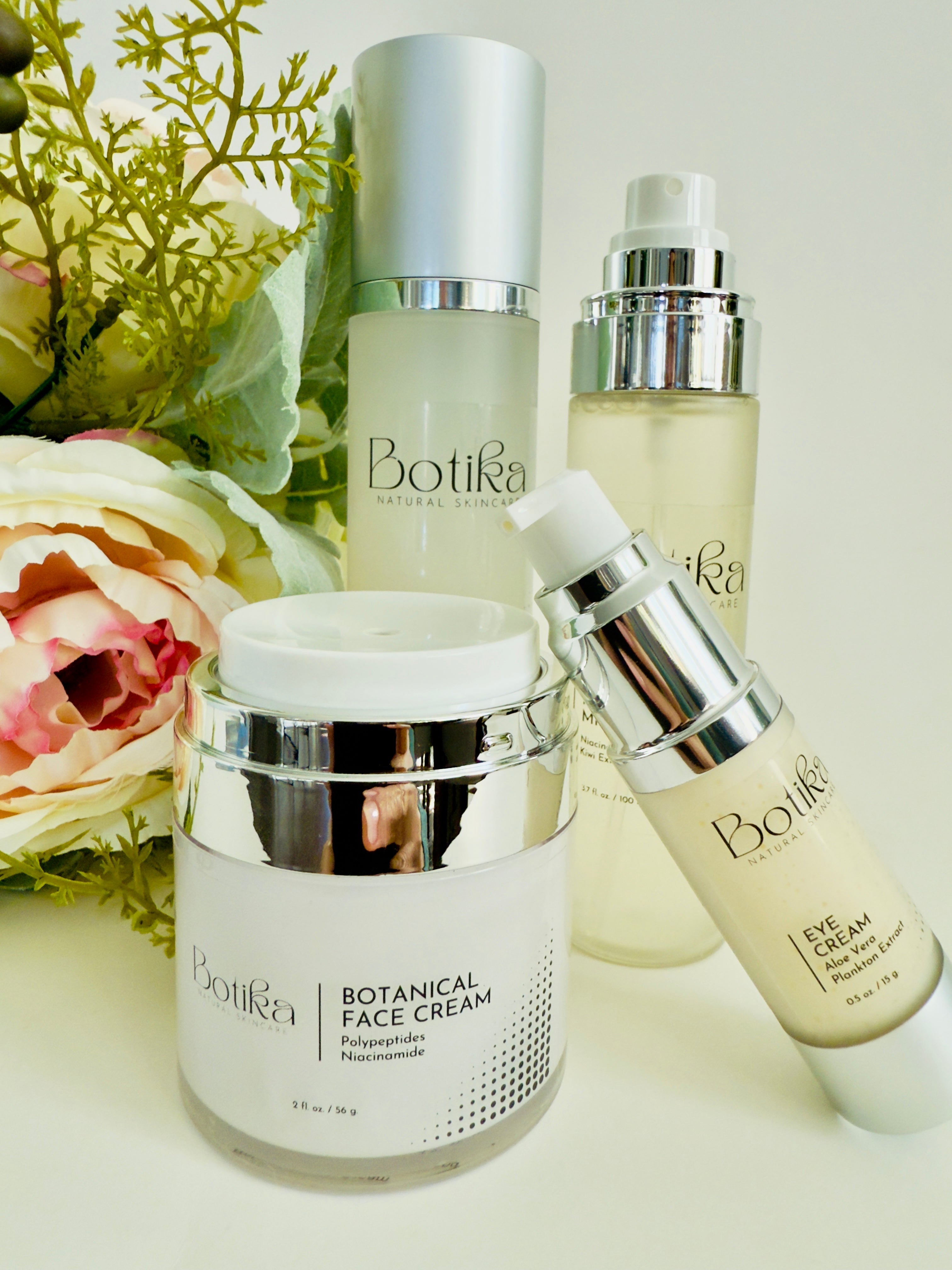
Something has shifted in the way people think about skincare. Consumers are reading labels more carefully, asking harder questions, and choosing products based on what's in them — not just what they promise on the front of the bottle.
At Botika, this shift is exactly why we exist. Here's what's driving it — and what it means for your skin.
The Problem With Conventional Skincare
For decades, the skincare industry operated on a simple formula: add synthetic actives for efficacy, add cheap fillers to reduce cost, and add aggressive preservatives to extend shelf life. The result was products that worked — sometimes — but came with a growing list of concerns.
Common synthetic ingredients now under scrutiny include:
- Parabens — synthetic preservatives linked to hormonal disruption (source)
- Sulfates (SLS/SLES) — harsh surfactants that strip the skin's natural moisture barrier
- Phthalates — plasticizers used in synthetic fragrances, associated with endocrine disruption
- Synthetic fragrances — one of the leading causes of contact dermatitis and skin sensitivity
- Mineral oil & petrolatum — petroleum-derived occlusives that sit on the skin without nourishing it
As awareness of these ingredients has grown — driven by research, social media, and a broader wellness movement — consumers have started voting with their wallets.
What's Driving the Natural Skincare Movement
1. Ingredient transparency
Shoppers now expect to understand every ingredient on a label. Apps like INCI Decoder and Think Dirty have made it easier than ever to research what you're putting on your skin. Brands that can't explain their formulas are losing trust fast.
2. Skin sensitivity is rising
Dermatologists report increasing rates of contact dermatitis, eczema, and reactive skin — conditions often aggravated by synthetic fragrances, preservatives, and harsh surfactants. Many people are turning to natural skincare after conventional products made their skin worse, not better.
3. The wellness-beauty connection
Consumers who prioritize clean eating, non-toxic home products, and mindful living are naturally extending that philosophy to their skincare. If you wouldn't eat it, why put it on your skin?
4. Environmental awareness
Synthetic chemicals don't just affect your skin — they wash off into waterways and accumulate in ecosystems. Natural, biodegradable ingredients are a more sustainable choice for the planet as well as your skin.
What to Look For in Natural Skincare
Not all "natural" claims are equal. Here's what actually matters when evaluating a natural skincare product:
- Short, recognizable ingredient lists — fewer ingredients means less risk of irritation and more transparency
- Botanical actives with proven efficacy — ingredients like bakuchiol, niacinamide, rosehip oil, and jojoba have strong research backing
- No synthetic fragrances — look for products scented only with essential oils or unscented entirely
- Clean preservation systems — ingredients like Leucidal (fermented radish root) preserve without synthetic chemicals
- Small-batch production — fresher products mean more potent actives and shorter supply chains
Our full Ingredient Library explains every ingredient we use, why we chose it, and what the research says.
The Botika Approach
At Botika, transparency isn't a marketing strategy — it's a baseline requirement. Every product we make is free from parabens, sulfates, synthetic fragrances, and artificial preservatives. Every ingredient is chosen because it works, not because it's cheap.
We handcraft our products in small batches in Nashville, Tennessee, using botanical actives, cold-pressed oils, and plant-based ingredients that work with your skin's biology.
Because we believe what goes on your skin matters just as much as what goes in your body.
— Monica Miramontes, Founder of Botika Skincare
Frequently Asked Questions
Is natural skincare actually more effective than conventional skincare?
It depends on the formula. Well-formulated natural skincare with proven botanical actives can be just as effective — and often gentler — than synthetic alternatives. The key is choosing products with evidence-backed ingredients, not just "natural" marketing claims.
How do I know if a product is truly natural?
Read the full INCI ingredient list, not just the front label. Look for recognizable botanical names, avoid synthetic preservatives and fragrances, and research brands that are transparent about their sourcing and formulation process.
Can natural skincare work for sensitive skin?
Yes — in fact, many people with sensitive skin find natural skincare gentler and more tolerable than conventional alternatives. The key is avoiding common irritants like synthetic fragrance and alcohol, and choosing formulas with calming botanicals like chamomile, aloe, and calendula.
Explore Botika's full natural skincare collection →
Want to learn more about every ingredient we use? Explore our full Ingredient Library →


